Is Ovulation Painful After IVF?
Quick Summary
Feeling twinges, cramps, or pressure in your lower belly during an IVF cycle is very common — but it’s usually not real ovulation pain.
In a natural cycle, ovulation pain (sometimes called mittelschmerz) happens when one ovary releases a single egg.
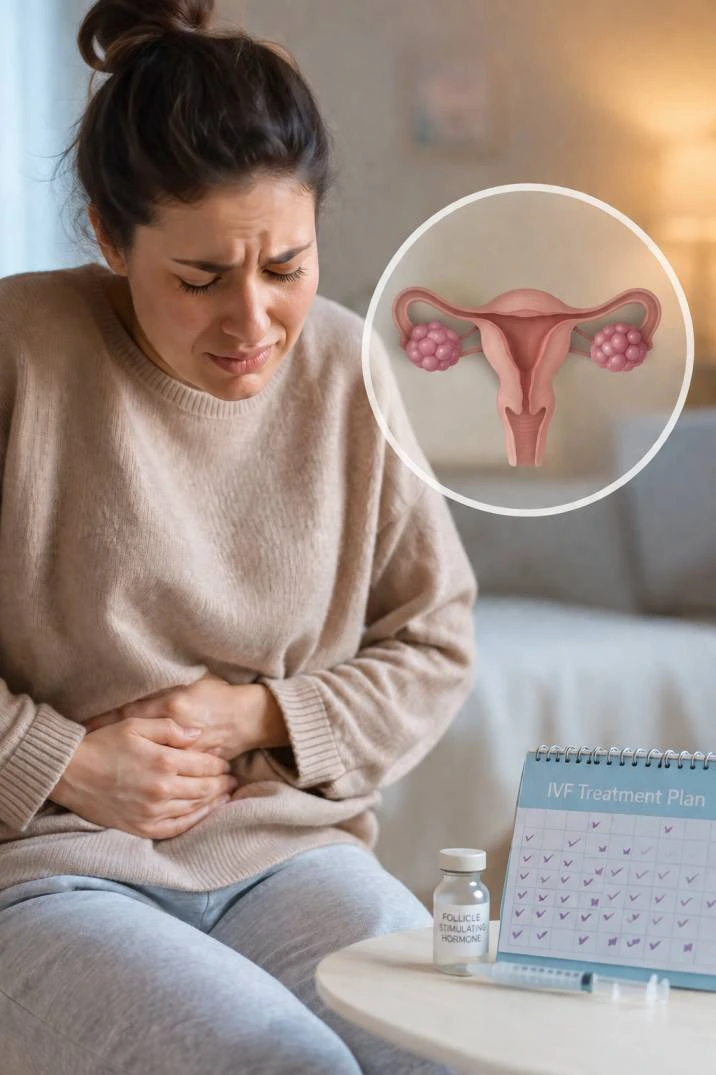
During IVF, your ovaries don’t work that way at all. Instead, fertility injections push your ovaries to grow many eggs at once, which makes them swell up to several times their normal size.
That swelling — plus the egg retrieval procedure and the hormone-rich days afterward — is what actually causes the “ovulation-like” pain people feel during IVF.
Most of this discomfort is mild to moderate, temporary, and manageable at home. But there’s one important exception: Ovarian Hyperstimulation Syndrome (OHSS), a condition where the ovaries become dangerously swollen and painful, and which needs prompt medical attention. Knowing the difference between “normal IVF discomfort” and “something to call your doctor about” is the whole point of this guide.
Why Do You Feel Pain That Feels Like Ovulation During IVF?
In a natural menstrual cycle, ovulation pain happens because one ovary releases one mature egg around day 14, and some women feel a sharp, one-sided twinge when that happens. Some women feel a sharp twinge of pain on one side of their lower abdomen during this time, known as ovulation pain.
IVF changes this process completely.
During IVF, ovulation doesn’t happen the usual way — instead, fertility medications stimulate the ovaries to produce multiple eggs, a process called ovarian stimulation, which can make the ovaries enlarge significantly.
After days of injections and monitoring, a doctor performs an egg retrieval procedure to collect the eggs before they’re naturally released on their own.
So the “ovulation pain” you feel during IVF is really your body’s reaction to:
- Stimulation injections that enlarge your ovaries far beyond their normal size
- Multiple developing follicles stretching the ovarian tissue
- The egg retrieval procedure itself
- Hormonal shifts from the medications used to trigger and support ovulation
What Does IVF-Related Pain Actually Feel Like?
Most people describe it as mild to moderate — closer to period cramps or bloating than sharp, severe pain.
IVF discomfort is usually mild to moderate: injections feel like a brief sting, egg retrieval is painless under sedation but causes cramps afterward, and embryo transfer causes minimal pressure.
Common sensations reported during different stages include:
| Stage | What It Can Feel Like |
| Stimulation injections | Brief stinging, mild soreness or bruising at the injection site |
| Ovaries enlarging | Pressure, heaviness, or bloating similar to PMS |
| Egg retrieval | Cramping and pelvic pressure once sedation wears off |
| After retrieval | Continued bloating, mild cramping, tenderness |
| Embryo transfer | Minimal pressure, occasional light cramping |
Abdominal discomfort from the ovaries growing can feel like pressure, heaviness, or bloating, similar to PMS symptoms, and hormonal changes can make physical discomfort feel more intense emotionally too.
Is Cramping After Embryo Transfer Normal Too?
Yes — and it’s one of the things patients worry about most.
Many women going through IVF experience cramping and abdominal pain after embryo transfer, and it’s common to wonder whether cramping means the cycle has failed — while others read the same cramping as a hopeful sign.
The honest answer is that mild cramping alone doesn’t reliably predict success or failure.
It’s best not to read too much into cramping during IVF treatment, since mild to moderate cramping and abdominal pain are common side effects caused by the hormonal changes triggered by IVF medications, as well as by the egg retrieval and embryo transfer procedures themselves.
How Long Does the Pain Last?
For most people, discomfort follows this rough timeline:
- During stimulation (roughly days 1–10 of injections): Mild bloating and pressure that builds as follicles grow.
- Around egg retrieval: Cramping and soreness for 1–3 days after the procedure as ovaries settle down.
- After retrieval, before transfer: Bloating and tenderness that gradually eases.
- After embryo transfer: Occasional mild cramping for a few days, often overlapping with progesterone support.
If pain is getting worse rather than better with each passing day, that’s a signal to check in with your clinic rather than wait it out.
When Pain Is a Warning Sign: Ovarian Hyperstimulation Syndrome (OHSS)
This is the most important part of this guide. OHSS is a real medical condition that can occur specifically because of IVF-style ovarian stimulation.
Ovarian hyperstimulation syndrome causes the ovaries to swell and become painful, and it may occur in women undergoing IVF or ovulation induction with injectable medications.
Treatment depends on severity — OHSS may improve on its own in mild cases, while severe cases may require hospitalization and additional treatment.
Symptoms that need medical attention right away
Cramping should be immediately reported to your doctor if it is accompanied by heavy bleeding, trouble urinating, shortness of breath, nausea, or vomiting, since these may be symptoms of ovarian hyperstimulation syndrome or ovarian torsion, both of which require medical attention.
A documented clinical case illustrates how OHSS can progress: one patient reported abdominal stabbing pain starting two days after her procedure, which progressively worsened, with an ultrasound later revealing fluid buildup in the abdomen; her symptoms included abdominal distension and pain radiating to her back on both sides.
Her vital signs at the time showed a fast heart rate of 116 beats per minute, with normal temperature, blood pressure, and oxygen levels — a reminder that OHSS can escalate even without fever or other “obvious” red flags.
Call your fertility clinic promptly if you notice:
- Rapidly worsening or severe abdominal pain (not just discomfort)
- Significant abdominal swelling or a bloated belly that keeps growing
- Nausea or vomiting
- Shortness of breath
- Reduced or painful urination
- Rapid weight gain over a day or two
- Dizziness or a fast heartbeat
Mild bloating and cramping are expected. Severe, escalating, or breathing-related symptoms are not — those need a same-day call to your care team.
Managing Normal IVF Discomfort at Home
For the everyday mild-to-moderate pain that most people experience, simple measures usually help:
- Rest and avoid strenuous exercise, especially around egg retrieval, since your ovaries are enlarged and more vulnerable
- Use a warm compress on your lower abdomen for cramping (check with your clinic first, as some advise against heat right after retrieval)
- Stay hydrated and eat light, easily digestible meals if you’re bloated
- Wear loose, comfortable clothing around your midsection
- Take pain relief only as approved by your fertility team — some common painkillers (like NSAIDs) may be discouraged around egg retrieval or embryo transfer
- Track your symptoms day by day so you can clearly describe any changes to your doctor
Frequently Asked Questions
1.Is it normal to feel ovulation-like pain during an IVF cycle? Yes. It’s common, and it’s usually caused by the ovaries enlarging from stimulation medication rather than actual ovulation.
2.Does pain after IVF mean the cycle failed? No. Mild cramping doesn’t reliably indicate success or failure either way — many people with successful cycles have cramping, and many with unsuccessful cycles have none.
3.How is IVF pain different from natural ovulation pain? Natural ovulation pain is a brief, one-sided twinge from a single egg release. IVF-related pain comes from multiple enlarged follicles, the retrieval procedure, and hormone medications, so it tends to be more of a generalized bloating, pressure, or cramping feeling.
4.When should I worry about pain after IVF? If pain is severe, rapidly worsening, or comes with vomiting, shortness of breath, significant swelling, or reduced urination, contact your clinic immediately — these can be signs of OHSS or ovarian torsion.
5.Can I take painkillers for IVF-related cramping? Only medications your fertility clinic has approved. Some over-the-counter pain relievers can interfere with the treatment process, so always check first.
6.Does egg retrieval hurt? The retrieval procedure itself is done under sedation and isn’t felt in the moment, but cramping and pelvic soreness are common for a day or two afterward as sedation wears off.
This article is for general information only and isn’t a substitute for personalized medical advice. If you’re experiencing pain during your IVF cycle, especially anything severe or unusual, contact your fertility clinic directly.

-
About Author
Dr. Supriya Puranik
Gynaecologist & IVF Specialist
MMC -072514 (1993)
Dr. Supriya Puranik, a renowned gynaecologist and infertility expert, leads the IVF & Gynaecology department at Sahyadri Hospitals Momstory in Shivaji Nagar, Pune. She is committed to helping couples overcome infertility challenges.