
Is Elective C-Section Becoming a Convenience Trend Over Medical Necessity?
ON THIS PAGE
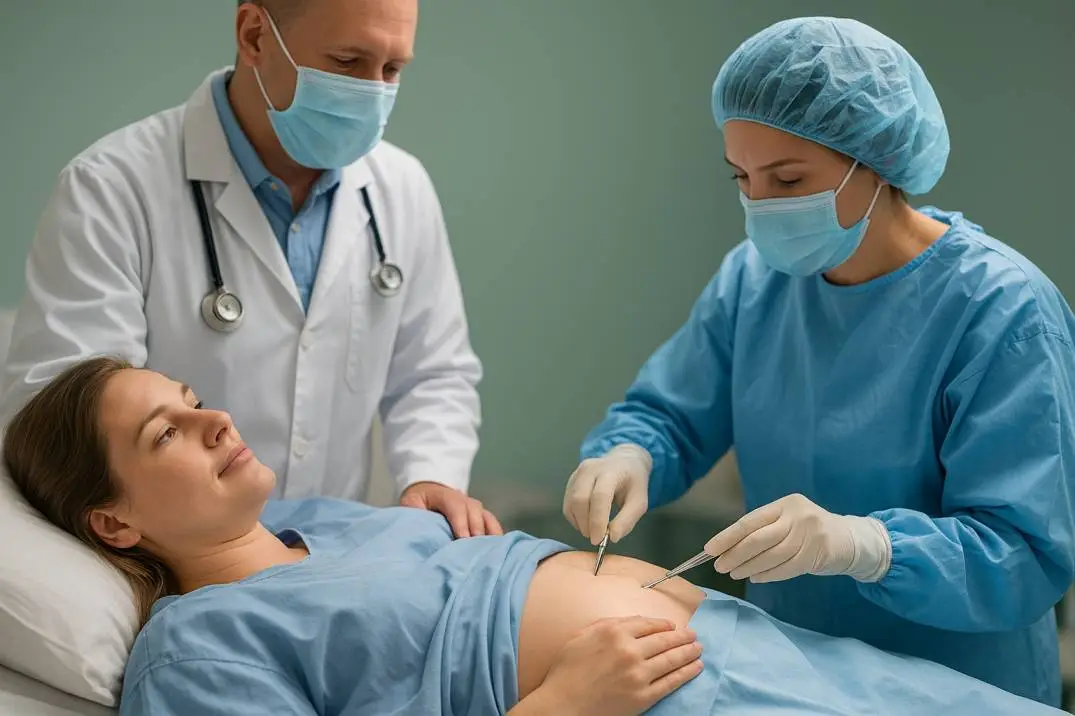
If you’re wondering whether elective caesarean sections (C-sections) are becoming a “convenience” trend, you’re not alone. I hear this question often from expectant parents who want clarity, not judgement.
My goal here is to walk you through what the data shows, why some people choose an elective C-section, how it compares with vaginal birth, and what this might mean for you and your baby.
By the end, you should feel better equipped to make an informed, confident decision with your maternity team.
Key takeaways:
- C-sections save lives when medically needed; elective C-sections are rising in some settings but trends vary by country and hospital.
- Reasons include fear of labour, scheduling control, prior traumatic birth, pelvic floor concerns, and perceived safety—but risks and recovery differ from vaginal birth.
- For healthy pregnancies, planned vaginal birth is usually recommended; a planned C-section may be reasonable for specific medical, obstetric, or psychosocial reasons.
- The safest plan is the one tailored to your health, your baby, and your values—decided jointly with your clinician.
What counts as an “elective” C-section?
An elective (or planned) C-section is scheduled before labour begins, usually at 39 weeks, and not for an urgent medical reason. This is different from:
- Medically indicated C-section: recommended for health reasons such as placenta praevia, breech with added risks, certain multiples, prior classical uterine scar, or fetal distress.
- Unplanned or emergency C-section: decided during labour when concerns arise.
“Elective” doesn’t mean frivolous. It simply means it isn’t strictly required for a clear medical indication. The reasons can still be valid and complex.
Are elective C-sections actually increasing?
Global C-section rates have risen over the past decades. In many high‑income countries, overall rates sit between 25% and 35%, with some regions higher.
Not all of this increase is elective; a significant share is due to older maternal age, higher BMI, more IVF pregnancies, repeat C-sections, lower tolerance for labour risk, and better access to monitoring that detects problems early.
Elective primary C-sections (first-time C-section by choice) are harder to measure, but they have become more common in some private settings and urban hospitals. In the NHS (UK), the overall C-section rate is around one‑third of births.
A portion of these are maternal request C-sections (MRCS). NHS guidance supports offering a planned C-section when a well-informed mother requests it after counselling.
So yes, in some contexts elective C-sections are more frequent—but the picture is nuanced and driven by multiple factors, not convenience alone.
Why do some people request an elective C-section?
Think of these as overlapping circles—physical, psychological, social, and practical reasons:
- Fear of childbirth (tokophobia): Severe anxiety about labour pain, loss of control, or medical emergencies can be debilitating. For some, a planned C-section reduces distress and is part of compassionate care.
- Prior traumatic birth: A difficult previous labour or emergency C-section can lead to post‑traumatic stress. A planned approach may restore a sense of control.
- Scheduling and support: Having a set date helps arrange childcare, partner leave, and family support—especially important when support networks are limited.
- Pelvic floor concerns: Athletes, those with existing pelvic floor issues, or people at higher risk of severe perineal tears may consider C-section to reduce certain pelvic floor injuries.
- Perceived safety: Some believe a planned C-section avoids labour-related risks, such as fetal distress or instrumental delivery.
- Breech preference: While vaginal breech birth can be considered in selected cases with experienced teams, many choose a planned C-section for breech presentation.
- Cultural and systemic factors: In some private systems, financial incentives, medico-legal pressures, and norms can nudge rates upwards.
As your doctor, I’d explore these reasons with you, validate your concerns, and offer balanced information and support services (for example, perinatal mental health or birth afterthoughts clinics).
Medical implications: how do outcomes compare?
No mode of birth is risk‑free. The balance of benefits and risks shifts based on your health, your baby’s condition, and your birth history.
1.Maternal outcomes
Potential advantages of planned C-section:
- Predictability: Lower chance of emergency surgery after a long labour.
- Avoids certain labour injuries: No perineal tears, no forceps or vacuum injury to the perineum.
- Lower risk of short‑term pelvic floor trauma: Reduced risk of severe obstetric anal sphincter injury compared with instrument‑assisted vaginal birth.
2.Potential disadvantages:
- Surgical risks: Higher risk of infection, blood clots (venous thromboembolism), bleeding requiring transfusion, and rare anaesthetic complications compared with uncomplicated vaginal birth.
- Longer recovery: Typically more pain and a longer hospital stay than after an uncomplicated vaginal birth.
- Future pregnancy risks: Placenta praevia, placenta accreta spectrum (abnormally adherent placenta), uterine scar complications, and a higher chance of needing repeat C-sections. These risks rise with each additional C-section.
- Adhesions: Internal scar tissue can cause pain or complicate future abdominal surgery.
3.Neonatal outcomes
Potential advantages of planned C-section:
- Lower risk of birth trauma associated with difficult instrumental delivery.
- For certain conditions (e.g., placenta praevia, some breech cases), improved safety.
Potential disadvantages:
- Respiratory issues: Slightly higher risk of transient breathing problems, especially if done before 39 weeks.
- Microbiome differences: Babies born by C-section have different early gut bacteria patterns; long‑term significance is still being studied.
- NICU admissions: A modest increase for transient issues in some studies, especially if surgery is earlier than 39 weeks or there are coexisting factors.
4.What about pain and recovery?
- Vaginal birth: Shorter hospital stay, faster early recovery for many. But severe perineal tears or instrumental delivery can mean prolonged pain and pelvic floor issues.
- Planned C-section: Predictable timing and anaesthesia; early mobilisation, multimodal pain relief, and enhanced recovery pathways help. Most feel functional within 2–6 weeks, but heavy lifting and driving may be limited for a period.
Is an elective C-section “easier”?
“Easier” depends on what you value and what you fear. If you are terrified of labour or had a traumatic experience before, a planned C-section may feel safer and kinder.
If you value a shorter hospital stay, a quicker return to certain activities, and fewer surgical risks, a planned vaginal birth may fit better—recognising that labour can change course.
A helpful reframe: choose the set of risks you are most comfortable with, after understanding both routes.
Pros and cons at a glance
Pros of elective C-section:
- Predictable date and team; less chance of urgent decisions in labour
- Avoids prolonged labour, instrumental birth, and severe perineal tearing
- May reduce anxiety for those with tokophobia or past trauma
- Can be the safer option for certain fetal positions or clinical contexts where vaginal birth is less favourable
Cons of elective C-section:
- It is major surgery: higher risks of infection, clots, bleeding, and injury to nearby organs than uncomplicated vaginal birth
- Longer initial recovery; limitations on activity
- Increased risks in future pregnancies (placenta accreta spectrum, placenta praevia, surgical adhesions)
- Slightly higher risk of early neonatal breathing difficulties, especially before 39 weeks
Pros of planned vaginal birth:
- No abdominal surgery; generally faster recovery when uncomplicated
- Lower rates of infection, clots, and haemorrhage compared with C-section
- Fewer complications in future pregnancies
- Immediate skin‑to‑skin and early breastfeeding often easier (though both are very possible after C-section with supportive care)
Cons of planned vaginal birth:
- Uncertainty about duration and pain of labour
- Risk of perineal tears, pelvic floor dysfunction, and—in a minority—instrumental delivery or emergency C-section
- Rare but serious risks include shoulder dystocia and haemorrhage
What do guidelines say?
- Most national guidelines recommend offering a planned vaginal birth for low‑risk pregnancies.
- If you request a C-section after counselling, NHS guidance supports providing one at around 39 weeks. You should be offered discussion of risks and benefits, help for anxiety (such as perinatal mental health services), and, if a clinician objects, referral to a willing colleague.
- Timing matters: Waiting until 39 weeks reduces the baby’s breathing risks, unless there’s a medical reason to deliver earlier.
How to make the decision that’s right for you?
So, is elective C-section a “convenience trend”?
The bottom line

-
About Author
Dr. Supriya Puranik
Gynaecologist & IVF Specialist
MMC -072514 (1993)
Dr. Supriya Puranik, a renowned gynaecologist and infertility expert, leads the IVF & Gynaecology department at Sahyadri Hospitals Momstory in Shivaji Nagar, Pune. She is committed to helping couples overcome infertility challenges.