Can IVF Injections Cause Weight Gain?
Dear patients,
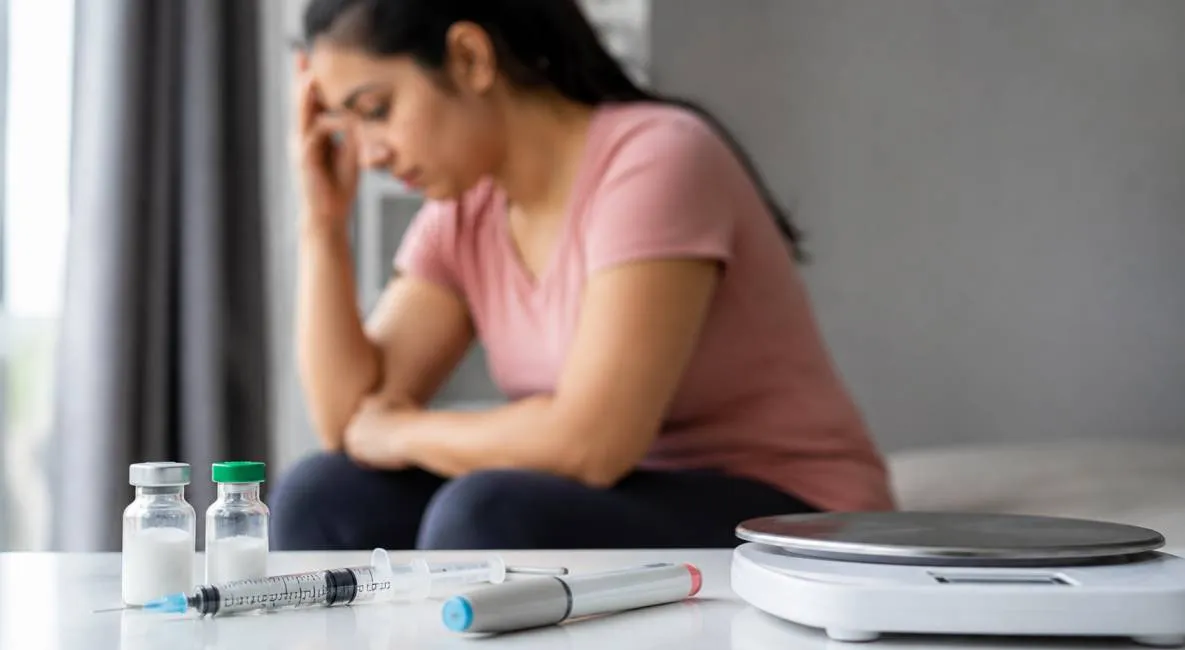
One of the questions I hear most often in my clinic — sometimes asked nervously, sometimes with real anxiety — is: “Doctor, will these injections make me gain weight?”
I want to answer this honestly and in detail, the way I would if you were sitting across from me in my consultation room.
Quick Answer
Yes, IVF injections can cause weight gain — but in almost every patient I treat, it is temporary and mostly water weight, not fat.
The number you see on the scale during a stimulation cycle usually reflects fluid retention, ovarian swelling, and bloating, not a lasting change in your body composition.
Once your hormone levels return to baseline after the cycle, most of that weight comes off within one to two weeks.
Let me walk you through exactly why this happens, what I consider normal versus what should prompt a call to me, and what I recommend to my own patients to manage it comfortably.
Why My Patients Gain Weight During an IVF Cycle
Almost every patient I see notices some change on the scale about ten days into their injections. Here is what is actually happening inside your body during this time:
1. Fluid Retention Is the Biggest Culprit
During ovarian stimulation, your ovaries are growing multiple follicles at once instead of the usual single follicle. This process pulls fluid into the body, and rising estrogen levels cause your body to hold onto water and sodium.
This is the single biggest reason the scale moves during a cycle — it is water, not fat, and I want you to remember that.
2. Your Ovaries Are Physically Larger
Each follicle is a small fluid-filled sac. Multiply that by 10, 15, or 20 follicles growing at once, and your ovaries genuinely become bigger and heavier for a few weeks.
That alone can add noticeable weight and a “bloated” feeling in your lower abdomen — this is something I check for at every monitoring visit.
3. Hormones Increase Appetite
Progesterone and elevated estrogen don’t just affect your ovaries — they affect your hunger cues too.
Many of my patients tell me they want to eat more, and cravings hit harder than usual during stimulation. I always reassure them this is a real physiological effect, not a lack of willpower.
4. Stress and Emotional Eating
IVF is emotionally intense, and I understand that deeply. Between injections, monitoring appointments, and the uncertainty of the process, many patients reach for comfort food more than usual.
Cortisol, your stress hormone, can also independently contribute to fluid retention and fat storage, especially around the midsection.
5. Reduced Activity
I advise my patients to avoid intense exercise — running or heavy lifting — during stimulation, because enlarged ovaries are more vulnerable to a rare but serious complication called ovarian torsion.
Less movement than usual can also contribute to the weight changes you notice.
6. Medication Type Matters
Not all IVF medications affect the body the same way:
| Medication Type | Common Examples | Typical Effect on Weight |
| Gonadotropins (injectables) | Gonal-F, Menopur, Follistim | Mostly fluid retention from ovarian stimulation |
| Trigger shot | Ovidrel, hCG | Can intensify bloating for 4–7 days after |
| Progesterone support | Injections, suppositories | Can increase appetite and mild bloating |
| Birth control (pre-cycle) | Combined oral contraceptives | More linked to sustained fluid retention/appetite than gonadotropins themselves |
Is This Weight Gain Permanent?
No — and this is the reassurance I give every one of my patients.
There is no consistent clinical evidence that IVF medications cause permanent fat gain or a lasting change in metabolism.
In my practice, the pattern I see again and again is:
- Weight climbs gradually during stimulation (roughly days 5–12 of injections)
- It peaks near the end of stimulation and around the trigger shot
- It’s often highest 4–7 days after the trigger shot
- It resolves within about 1–2 weeks once hormone levels return to baseline
If your cycle results in pregnancy, of course, a whole new and expected phase of weight change begins — but that is pregnancy itself, not the IVF medication.
Normal Bloating vs. a Warning Sign (OHSS)
This is the part I want you to pay closest attention to. A small amount of bloating and 2–5 lbs of fluid weight is common and expected in my patients.
But rapid, significant weight gain can be a sign of Ovarian Hyperstimulation Syndrome (OHSS), a real medical complication that I take very seriously and that needs prompt attention.
| Normal IVF Bloating | Possible OHSS — Contact Your Clinic |
| Mild abdominal fullness or tightness | Rapid weight gain (several pounds in 1–2 days) |
| Clothes feeling snugger | Severe or worsening abdominal pain |
| Slight fatigue | Significant nausea or vomiting |
| Weight gain of a few pounds | Shortness of breath |
| Symptoms ease within 1–2 weeks post-cycle | Little or no urination, or very dark urine |
| — | Severe bloating that keeps getting worse |
If you notice the symptoms in the right-hand column, please contact my clinic or seek medical care right away.
This isn’t something to manage on your own with diet or exercise — it needs a proper clinical assessment.
What I Recommend to My Patients During Stimulation
I want to be upfront with you: I do not recommend trying to lose weight during stimulation, and I discourage restrictive dieting during a cycle — your body needs steady nutrition to respond well to treatment. Instead, here is what I advise:
1.Stay hydrated. Counterintuitively, drinking more water helps reduce the bloated feeling rather than making it worse.
2.Cut back on very salty and processed foods. Sodium worsens fluid retention, so I encourage whole foods, vegetables, and lean protein.
3.Limit caffeine and alcohol. Both can worsen bloating and dehydration.
4.Choose gentle movement. Walking and light yoga, once cleared by me, help you feel less sluggish without risking ovarian torsion.
5.Wear comfortable, looser clothing. This sounds small, but my patients tell me it makes a real emotional difference on the harder days.
6.Practice stress management. Meditation, journaling, and leaning on your support system can reduce stress-driven snacking.
7.Don’t weigh yourself daily. Watching the scale fluctuate day to day only adds anxiety. I suggest checking in weekly instead.
8.Talk to me. Any time something feels “off,” please call my clinic rather than guessing on your own.
Frequently Asked Questions
1.Does every patient gain weight during IVF? No. I see weight changes vary widely by person, medication dose, and individual response to stimulation. Some of my patients notice little to no change at all.
2.How much weight gain is normal during IVF? In my experience, a range of roughly 2–10 lbs during active stimulation is common, and it is mostly fluid-related. Weight gain of 15–20 lbs or more, especially if it comes on rapidly, is something I want you to call me about.
3.Will the weight come back off on its own? In most of my patients, yes — typically within one to two weeks after the cycle ends and hormone levels normalize.
4.Does progesterone cause weight gain after the embryo transfer? Progesterone support can increase appetite and mild bloating for some patients, but this is generally modest and temporary.
5.Can I diet or exercise intensely to prevent weight gain during my cycle? I don’t recommend it. Your body needs adequate nutrition to respond well to stimulation, and intense exercise carries a small risk given your enlarged ovaries. I always advise gentle movement and balanced eating instead.
6.Is bloating a sign my cycle is working well? Bloating simply tells me your ovaries are responding to the stimulation medication — it isn’t a reliable predictor of how many eggs we’ll retrieve or how successful your cycle will be.
My Message to You
If there is one thing I want every patient starting IVF to hear from me, it’s this: expect some bloating and a few extra pounds, and know that it is temporary.
Your body is doing something remarkable — growing multiple follicles at once — and the fluid retention that comes with it is a normal physiological response, not a failure of diet or willpower.
Keep an eye out for the warning signs of OHSS I’ve described above, stay in close contact with my clinic, and be gentle with yourself through this process.
I am here to support you through every step of it.
With care, Dr. Supriya Puranik
This article is intended for general patient education and does not replace personalized medical advice.
If you have concerns about weight changes, bloating, or possible OHSS during your own IVF cycle, please contact your fertility care team directly.

-
About Author
Dr. Supriya Puranik
Gynaecologist & IVF Specialist
MMC -072514 (1993)
Dr. Supriya Puranik, a renowned gynaecologist and infertility expert, leads the IVF & Gynaecology department at Sahyadri Hospitals Momstory in Shivaji Nagar, Pune. She is committed to helping couples overcome infertility challenges.