Does IVF Use Another Man’s Sperm?

Quick Summary
No, IVF does not automatically use another man’s sperm. In most IVF (In Vitro Fertilization) cycles, the male partner’s own sperm is used to fertilize the egg.
Donor sperm (sperm from another man) is only used in specific situations — such as male infertility, absence of a male partner, genetic disease risk, or same-sex/single-parent family building — and only with the full knowledge and written consent of everyone involved.
Clinics never substitute donor sperm without informing patients.
This blog breaks down exactly how sperm is selected in IVF, when donor sperm comes into play, how safe and legal it is, and answers the most common questions people search about this topic.
What Is IVF, in Simple Terms?
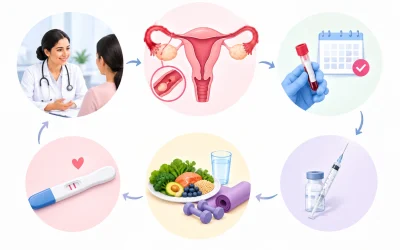
IVF stands for In Vitro Fertilization. It’s a fertility treatment where:
- Eggs are collected from a woman’s ovaries.
- Sperm is collected from her partner (or a donor).
- The egg and sperm are combined in a lab dish to create an embryo.
- The embryo is transferred into the woman’s uterus to (hopefully) result in pregnancy.
The word “vitro” means “in glass” — referring to the lab dish where fertilization happens, instead of inside the body.
So, Whose Sperm Is Actually Used in IVF?
By default, IVF uses the sperm of the intended father — meaning the male partner of the woman undergoing treatment, or the sperm the couple has specifically chosen to use (including their own frozen/banked sperm from earlier).
Donor sperm is used only when it is medically necessary or intentionally chosen, such as:
1. Severe Male Infertility
If the male partner has no sperm in his ejaculate (azoospermia), extremely poor sperm quality, or sperm that cannot fertilize an egg even with advanced techniques like ICSI (Intracytoplasmic Sperm Injection).
2. Genetic Disease Risk
If the male partner carries a genetic condition that could be passed on to the child, some couples choose donor sperm to avoid that risk.
3. Single Women or Same-Sex Female Couples
Women who want to have a child without a male partner, or lesbian couples, may choose donor sperm as their only option to conceive.
4. Previous Failed IVF Cycles Due to Sperm Issues
In rare cases where repeated IVF failures are traced back to sperm-related problems, donor sperm may be recommended.
5. Same-Sex Male Couples or Single Men (via Surrogacy)
In cases involving a surrogate, sperm from one of the intended fathers (or occasionally a donor) fertilizes a donor or surrogate-provided egg.
In every one of these cases, the decision to use donor sperm is made consciously, discussed with a fertility doctor, and signed off on with informed consent — never done secretly or automatically.
How Do Clinics Prevent Mix-Ups or Wrong Sperm Use?
This is one of the biggest fears people have, so it’s worth addressing directly.
Fertility clinics follow strict identification and chain-of-custody protocols, including:
- Double-witnessing: Two staff members independently verify patient identity at every step (sample collection, labeling, fertilization, embryo transfer).
- Barcoding and electronic witnessing systems: Many modern IVF labs use electronic tracking (similar to barcodes) so samples are matched to the correct patient at every stage.
- Labeled, sealed containers: Sperm and egg samples are labeled immediately with patient ID details and cross-checked before use.
- Legal documentation: Consent forms specify exactly whose sperm and eggs are to be used, and clinics are legally required to follow this.
Genuine sperm mix-up cases are extremely rare and have occurred only in a small number of documented, widely publicized incidents worldwide — almost always due to human error at a specific clinic, not a routine part of how IVF works. These cases led to reforms in lab protocols in most countries.
What Is Donor Sperm IVF Called?
When donor sperm is used, the process is often referred to as:
- Donor Insemination (DI) — if used with IUI (Intrauterine Insemination)
- IVF with Donor Sperm — if used specifically within an IVF cycle
Donor sperm typically comes from a licensed sperm bank, where donors are:
- Screened for genetic diseases, infections (HIV, Hepatitis B/C, STIs), and overall health
- Assessed for sperm quality and count
- Required to provide medical and family history
- In many countries, subject to legal limits on how many families a single donor’s sperm can be used for
Do You Need to Give Consent for Donor Sperm to Be Used?
Yes — always. No fertility clinic, anywhere, is permitted to use donor sperm without explicit, written, informed consent from the patient(s). This is a legal and ethical requirement globally, not just in India but in virtually every country with regulated fertility treatment.
In India specifically, the Assisted Reproductive Technology (ART) (Regulation) Act, 2021 governs how ART clinics and sperm banks operate, including:
- Mandatory consent forms
- Donor screening requirements
- Restrictions on donor anonymity and compensation
- Record-keeping requirements
If you’re undergoing IVF, you will sign detailed consent forms specifying exactly whose sperm (and eggs) will be used — and you can ask your clinic to walk you through this before treatment begins.
Can You Choose Not to Use Donor Sperm?
Absolutely. If male infertility is the barrier to conception, couples have several options before donor sperm is even suggested:
- ICSI (Intracytoplasmic Sperm Injection) — a single healthy sperm is directly injected into the egg, useful even with very low sperm counts
- Surgical sperm retrieval (TESA/TESE/PESA) — sperm is retrieved directly from the testicles when none is present in ejaculate
- Sperm freezing in advance — for men undergoing treatments (like chemotherapy) that could affect fertility later
- Lifestyle and medical treatment — sometimes sperm quality can be improved with treatment before IVF
Donor sperm is generally presented as an option — not a default — and only after other possibilities are discussed.
Is It Possible for a Clinic to Use Donor Sperm Without Telling You?
No legitimate, licensed fertility clinic does this. It would be:
- Illegal in virtually every country with ART regulations (including India, the US, UK, and EU nations)
- A serious ethical and legal violation that could result in loss of license, lawsuits, and criminal liability for the clinic
- Against standard medical protocol, which requires documented consent at every stage
If you ever have doubts or concerns about which sperm is being used in your treatment, you have the right to:
- Ask your clinic directly for full transparency on the process
- Review and confirm all consent documents before every procedure
- Request in writing that only your specified sperm source be used
- Choose an accredited clinic registered under your country’s fertility regulatory body
Key Takeaways
- IVF typically uses the intended father’s own sperm — donor sperm is the exception, not the rule.
- Donor sperm is only used in specific situations (male infertility, genetic risk, single parents, same-sex couples) and always with informed, written consent.
- Clinics follow strict identity-verification protocols (double-witnessing, labeling, electronic tracking) to prevent mix-ups.
- Donor sperm comes from screened, licensed sperm banks, not random or unverified sources.
- Laws like India’s ART (Regulation) Act, 2021 legally mandate consent and screening.
- You always have the right to ask questions, review consent forms, and confirm exactly whose sperm is being used.
Frequently Asked Questions (FAQs)
Q1. Does IVF always use the husband’s or partner’s sperm? Yes, by default. Donor sperm is used only when medically necessary or specifically requested, and always with consent.
Q2. Can a clinic switch to donor sperm without informing the patient? No. This would be illegal and against medical ethics. Clinics require signed consent before using any donor sperm.
Q3. What happens if the male partner has zero sperm count (azoospermia)? Doctors first try surgical sperm retrieval methods (TESA/TESE). Donor sperm is only considered if no viable sperm can be retrieved.
Q4. Is donor sperm safe? Yes. Donor sperm from licensed banks is screened for genetic conditions, infections, and overall health before being approved for use.
Q5. Can single women or same-sex couples use IVF with donor sperm? Yes, this is one of the most common legitimate uses of donor sperm in IVF and IUI treatments.
Q6. How do I know for sure whose sperm was used in my IVF cycle? Your consent forms will specify this in writing. You can also ask your clinic for full documentation and traceability records.
Q7. Is donor sperm anonymous? This varies by country. In India, under current ART regulations, donor identity is protected but records are maintained by registered sperm banks. Rules differ elsewhere (e.g., some countries allow donor-conceived children to access donor identity at age 18).
Q8. Can I request that only my partner’s sperm be used, even if quality is poor? Yes, this is your choice. Doctors will advise on success rates, but the final decision on whether to proceed with a partner’s sperm or explore alternatives like ICSI or donor sperm is yours.
This blog is for general informational purposes and does not replace professional medical advice. Please consult a qualified fertility specialist or ART clinic registered under your country’s regulatory body for guidance specific to your situation.

-
About Author
Dr. Supriya Puranik
Gynaecologist & IVF Specialist
MMC -072514 (1993)
Dr. Supriya Puranik, a renowned gynaecologist and infertility expert, leads the IVF & Gynaecology department at Sahyadri Hospitals Momstory in Shivaji Nagar, Pune. She is committed to helping couples overcome infertility challenges.