Menorrhagia vs Normal Heavy Periods: How to Tell the Difference

- Menorrhagia and “heavy periods” mean the same thing medically.
- The difference is impact: how much you bleed, for how long, and what it does to your life.
- Heavy periods can be normal at certain stages of life.
- Tiredness, breathlessness and large clots are not things to ignore.
- Most causes are treatable once found.
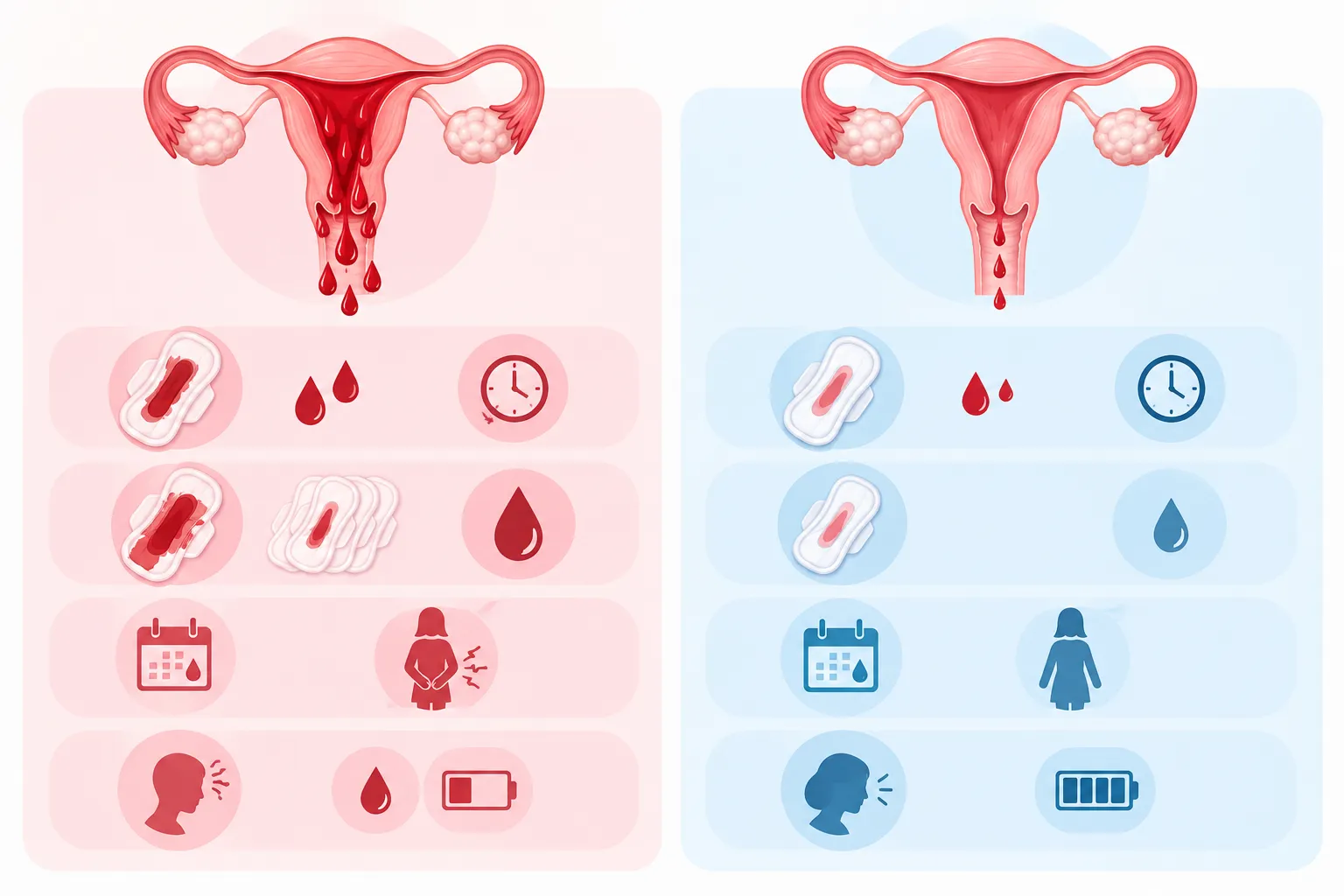
Menorrhagia vs normal heavy periods: comparison
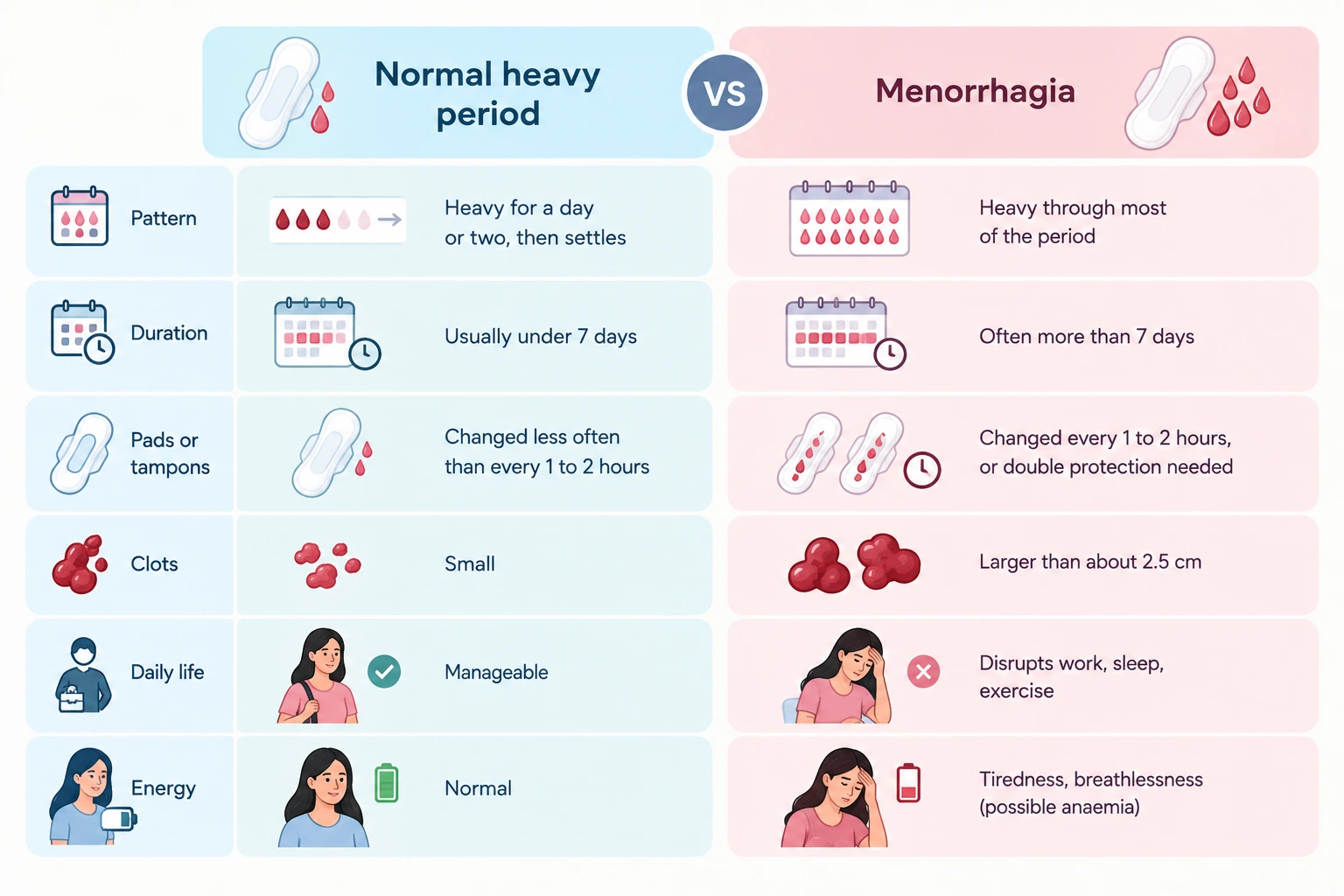
| Normal heavy period | Menorrhagia | |
| Pattern | Heavy for a day or two, then settles | Heavy through most of the period |
| Duration | Usually under 7 days | Often more than 7 days |
| Pads or tampons | Changed less often than every 1 to 2 hours | Changed every 1 to 2 hours, or double protection needed |
| Clots | Small | Larger than about 2.5 cm |
| Daily life | Manageable | Disrupts work, sleep, exercise |
| Energy | Normal | Tiredness, breathlessness (possible anaemia) |
This table is a guide, not a diagnosis. Your doctor decides based on your history and tests.
The NHS lists these signs of heavy periods: changing a pad or tampon every 1 to 2 hours, using two products together, periods lasting more than 7 days, clots larger than about 2.5 cm, bleeding through to clothes or bedding, and feeling very tired or short of breath.
When can heavy periods be normal?
What causes menorrhagia?
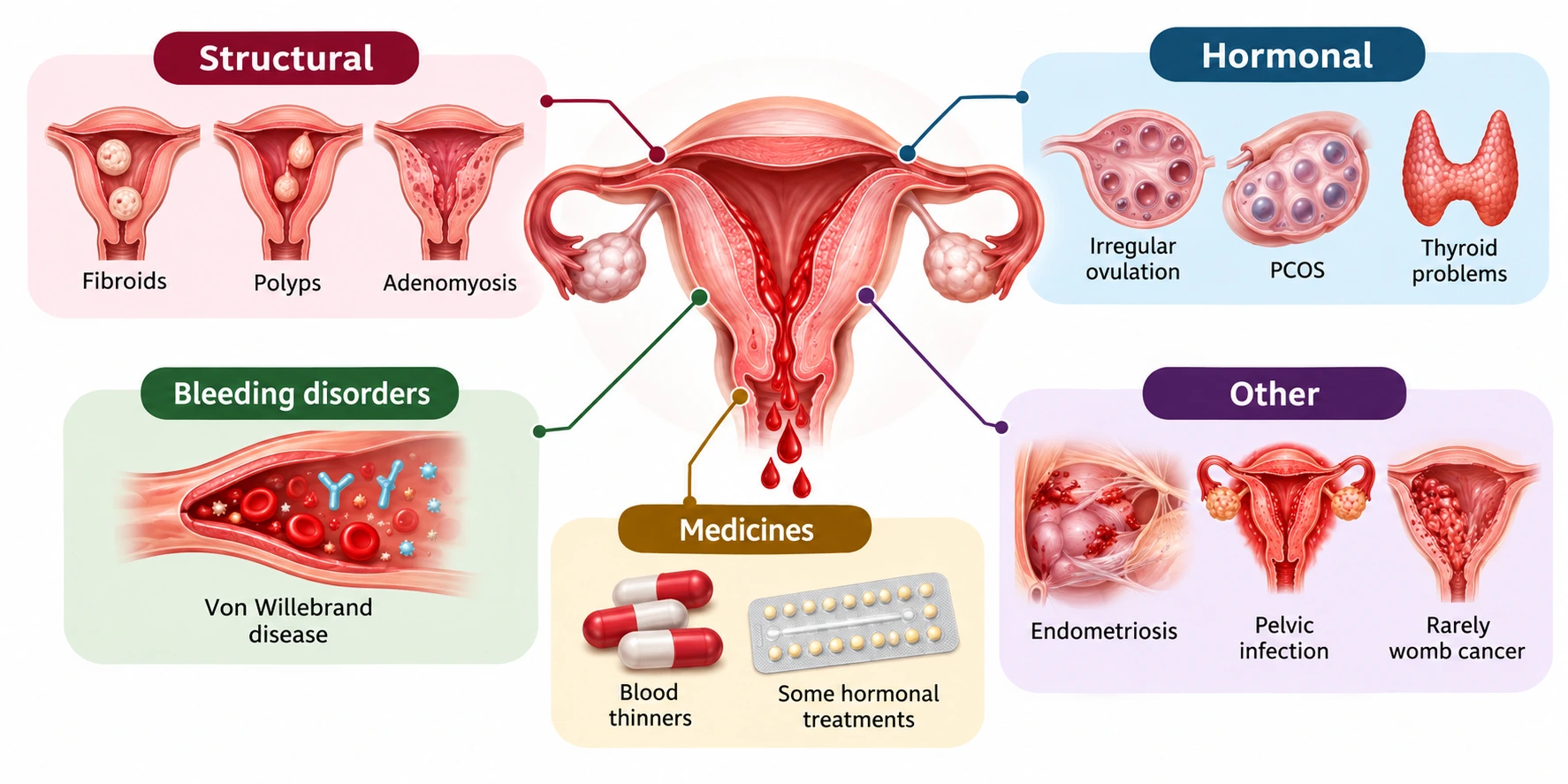
| Cause | Examples |
| Structural | Fibroids, polyps, adenomyosis |
| Hormonal | Irregular ovulation, PCOS, thyroid problems |
| Bleeding disorders | Von Willebrand disease |
| Medicines | Blood thinners, some hormonal treatments |
| Other | Endometriosis, pelvic infection, rarely womb cancer |
Conditions such as PCOS, fibroids, endometriosis, adenomyosis and pelvic inflammatory disease can cause heavy periods, as can some anticoagulants and chemotherapy medicines. Stress and depression are also listed. Rarely, it can signal womb cancer.
A bleeding disorder is easy to miss. One reference notes that up to 20% of women with heavy menstrual bleeding may have an underlying bleeding disorder. This is more likely if you have bled heavily since your first period.
Does it affect fertility or pregnancy?
- Some causes of heavy bleeding, such as fibroids, polyps and hormonal problems, can sometimes affect fertility. Evidence varies by type and size.
- Heavy periods themselves do not mean you are infertile.
- Anaemia from long-term blood loss can leave you drained and should be treated.
- If you are trying to conceive, tell your doctor. It changes which treatment is suitable.
If you have a late period followed by heavy bleeding, take a pregnancy test. All patients with abnormal uterine bleeding should be tested for pregnancy and anaemia.
How is it diagnosed?
- History. Your doctor asks about flow, clots, cycle length and family bleeding history.
- Examination. A physical and pelvic check.
- Blood tests. Haemoglobin or blood count, thyroid, and sometimes clotting tests.
- Pregnancy test.
- Ultrasound. Transvaginal ultrasound is the first-line imaging choice for most patients.
- Further tests when needed. Hysteroscopy or endometrial sampling, based on age and risk.
Tip: Track your periods for 2 to 3 months before the visit. Note dates, how often you change products, clot size and symptoms.
How is menorrhagia treated?
| Option | Used for | Note |
| Iron supplements | Anaemia | Treats the effect, not the cause |
| Tranexamic acid | Reducing flow | Taken during periods; ask your doctor about suitability |
| Pain relief (NSAIDs) | Pain and flow | Not suitable for everyone |
| Hormonal options | Cycle control | Pills, injections or implants, chosen individually |
| Hormonal IUS | Long-term control | Described as the most effective long-term medical treatment for heavy menstrual bleeding. |
| Surgery | Fibroids, polyps, or when medicines fail | Hysterectomy is the most effective treatment for reducing heavy bleeding, but it is a major step. |
Your choice depends on the cause, your age, and whether you want a pregnancy. Do not start or stop medicines without medical advice.
Red Flags: when to seek care
- Heavy periods are affecting your life or have lasted a while
- You have severe period pain
- You bleed between periods or after sex
- You also have pain when passing urine, stools or during sex
Seek urgent care if:
- You soak through a pad or tampon every hour for several hours
- You feel dizzy, faint, breathless or have a racing heart
- You are heavily bleeding and could be pregnant
- You pass very large clots with severe pain
See a gynaecologist in Pune
If you are searching for a gynaecologist in Pune for heavy periods, a consultation can clarify whether yours is normal or needs treatment. Dr. Supriya Puranik, a gynaecologist and IVF specialist in Pune, can assess the cause and discuss options suited to your age and plans for pregnancy. You can read about her on the about page.
Book a consultation: call +91 75025 19999 or use the appointment form.
Red Flags: when to seek care
Is menorrhagia the same as heavy periods?
How much bleeding is too much?
Is it normal to pass clots?
Can stress cause heavy periods?
Can heavy periods cause anaemia?
Do heavy periods mean cancer?
Can fibroids cause heavy periods?
Does heavy bleeding affect pregnancy?
How long can I wait before seeing a doctor?
Can diet fix menorrhagia?

-
About Author
Dr. Supriya Puranik
Gynaecologist & IVF Specialist
MMC -072514 (1993)
Dr. Supriya Puranik, a renowned gynaecologist and infertility expert, leads the IVF & Gynaecology department at Sahyadri Hospitals Momstory in Shivaji Nagar, Pune. She is committed to helping couples overcome infertility challenges.