How to Tell If It’s Endometriosis or Adenomyosis A Complete Guide
Summary
Endometriosis and adenomyosis are often called “sister conditions” because they’re both caused by endometrial-like tissue growing where it shouldn’t — but in different places.
Endometriosis happens when tissue similar to the uterine lining grows outside the uterus, on organs like the ovaries, fallopian tubes, bladder, or bowel.
Adenomyosis happens when that same type of tissue grows into the muscular wall of the uterus itself.
Because both cause pelvic pain, painful periods, and painful sex, they’re easy to confuse — and many women actually have both at once.
The clearest clue to tell them apart is when and how the pain shows up: adenomyosis tends to cause constant, deep, central pelvic pain along with heavy bleeding, while endometriosis tends to cause sharper, cyclical pain tied to your period, ovulation, sex, or bowel movements.
But symptoms alone can’t give you a definite answer — imaging (ultrasound or MRI) and sometimes laparoscopic surgery are needed to confirm which condition (or both) you have.
This guide breaks down the differences in plain language: what each condition is, how their symptoms differ, how doctors diagnose them, treatment options, and answers to the most common questions people search for.
What Is Endometriosis?
Endometriosis is a chronic condition where tissue that behaves like the uterine lining (endometrium) grows in places outside the uterus. Common locations include:
- The ovaries (forming cysts called “chocolate cysts” or endometriomas)
- The fallopian tubes
- The outer surface of the uterus
- The lining of the pelvis
- Less commonly, the bladder, bowel, or other organs
Each month, this misplaced tissue responds to hormonal changes just like the normal uterine lining does — it thickens, breaks down, and bleeds.
But unlike a normal period, this blood has no way to leave the body. It gets trapped, causing inflammation, scar tissue, and adhesions (tissue that sticks organs together).
What Is Adenomyosis?
Adenomyosis occurs when endometrial-like tissue grows into the myometrium — the thick muscular wall of the uterus.
This tissue continues to thicken and bleed with each menstrual cycle, but because it’s trapped inside the uterine wall, it causes the uterus to become enlarged, thickened, and tender.
Adenomyosis can be:
- Diffuse — spread throughout the uterine wall
- Focal — concentrated in one area, sometimes forming a mass called an adenomyoma
It’s sometimes described as “endometriosis of the uterus,” though the two conditions are medically distinct.
Key Differences at a Glance
| Feature | Endometriosis | Adenomyosis |
| Where tissue grows | Outside the uterus (ovaries, pelvis, bowel, bladder) | Inside the uterine muscle wall |
| Pain pattern | Often cyclical — worse around periods, ovulation, sex, or bowel movements | Often constant, deep, central pelvic pain |
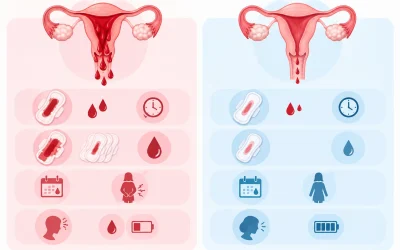
| Bleeding | May or may not cause heavy bleeding | Strongly linked to heavy, prolonged menstrual bleeding |
| Uterus size | Usually normal | Often enlarged and tender (“boggy” uterus) |
| Fertility impact | Can affect fertility, especially in moderate-severe cases | Can affect fertility and pregnancy outcomes |
| Typical age group | Often diagnosed in the 20s–30s | Often diagnosed in the late 30s–40s, especially after childbirth |
| Diagnosis | Ultrasound/MRI can suggest it; laparoscopy confirms it | Usually diagnosed with transvaginal ultrasound or MRI |
| Can they occur together? | Yes — very commonly | Yes — very commonly |
Symptoms: How They Overlap and How They Differ
Symptoms both conditions share
- Severe menstrual cramps (dysmenorrhea)
- Chronic pelvic pain
- Pain during sex (dyspareunia)
- Fatigue
- Bloating
Because so much overlaps, research comparing the two conditions has found that pain during intercourse doesn’t reliably distinguish one from the other — it shows up often in both.
Signs that point more toward adenomyosis
- Heavy menstrual bleeding is one of the strongest signals. Studies comparing symptom profiles found heavy bleeding was reported far more often by people with adenomyosis than those with endometriosis.
- Pain that feels constant, deep, and centered in the middle of the pelvis, rather than only appearing around your period
- A uterus that feels enlarged or tender on examination
- Symptoms that don’t clearly follow your menstrual cycle — pain “all the time” rather than a clear pattern
Signs that point more toward endometriosis
- Pain that’s more severe overall and tends to spike around specific triggers: menstruation, ovulation, bowel movements, or urination
- Pain that comes and goes with your cycle rather than staying constant
- Digestive symptoms during your period (painful bowel movements, bloating, changes in bowel habits) if tissue has grown near the bowel
- Difficulty conceiving, since endometriosis is more strongly linked to fertility struggles through scarring around the ovaries and tubes
- History of ovarian cysts (endometriomas)
When both conditions are present
It’s common — and research shows that having both at once tends to produce the highest overall symptom burden, meaning worse pain and more disruption to daily life than having either condition alone.
If your symptoms feel unusually intense or resistant to treatment, it’s worth asking your doctor to check for both.
What Causes Them?
Neither condition has one single confirmed cause, but both share overlapping theories:
- Retrograde menstruation — menstrual blood flowing backward through the fallopian tubes into the pelvis instead of leaving the body, allowing tissue to implant elsewhere (mainly linked to endometriosis)
- Tissue invasion — endometrial cells burrowing into the uterine muscle (adenomyosis)
- Estrogen dependence — both conditions are fueled by estrogen, which is why symptoms often ease after menopause
- Genetics — having a close relative with either condition raises your risk
- Uterine trauma — for adenomyosis, prior uterine surgery, C-sections, or childbirth may increase risk by disrupting the barrier between the lining and the muscle wall
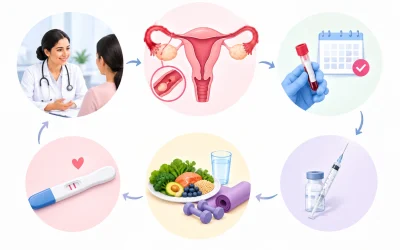
How Doctors Diagnose Each Condition
Diagnosing adenomyosis
- Transvaginal ultrasound is usually the first step and can often detect signs like uterine thickening or an enlarged uterus
- MRI gives a more detailed picture and is especially useful when ultrasound results aren’t clear or when both adenomyosis and endometriosis are suspected together
- Adenomyosis can often be diagnosed through imaging alone, without surgery
Diagnosing endometriosis
- Ultrasound or MRI can pick up larger endometriosis lesions or ovarian cysts, but can miss smaller or superficial patches
- Laparoscopy (a minimally invasive surgery where a camera is inserted through a small incision near the belly button) remains the most definitive way to confirm endometriosis, since it allows direct visualization — and sometimes treatment — of the tissue
- A pelvic exam and detailed symptom history also guide diagnosis
Why diagnosis can take time
Because symptoms overlap so heavily, and because endometriosis in particular often requires surgery for a definite diagnosis, it’s common for women to see multiple doctors over several years before getting a clear answer.
Keeping a symptom diary — noting when pain occurs, how heavy your bleeding is, and any patterns — can help your doctor narrow things down faster.
Treatment Options
Treatment approaches for both conditions can overlap since they’re both estrogen-driven, but the specifics differ.
For adenomyosis
- Hormonal treatments (birth control pills, hormonal IUDs, GnRH agonists) to reduce bleeding and pain
- Pain relievers (NSAIDs) for symptom management
- Uterine artery embolization in select cases
- Hysterectomy — the only definitive cure, typically considered when symptoms are severe and childbearing is complete
For endometriosis
- Hormonal therapy to suppress the menstrual cycle and slow tissue growth
- Pain management with NSAIDs or other medications
- Laparoscopic excision or ablation surgery to remove or destroy visible lesions
- Fertility treatment support if endometriosis is affecting conception
- In severe, treatment-resistant cases, hysterectomy may be considered, though it doesn’t guarantee removal of endometriosis outside the uterus
If you have both
Treatment usually needs to be individualized, often combining hormonal suppression with targeted surgery, since treating only one condition may leave the other’s symptoms unresolved.
Frequently Asked Questions
1.Can you have endometriosis and adenomyosis at the same time? Yes. The two conditions frequently coexist, and having both is associated with a higher overall symptom burden than having either alone.
2.Which one causes heavier periods? Adenomyosis is much more strongly associated with heavy menstrual bleeding than endometriosis.
3.Which one is more painful? Research suggests endometriosis tends to cause more severe pain symptoms overall, particularly around specific triggers like sex, ovulation, or bowel movements, while adenomyosis pain tends to be more constant and centrally located.
4.Can an ultrasound tell the difference between them? A transvaginal ultrasound is often good at detecting adenomyosis (an enlarged, thickened uterus). It can also spot larger endometriosis lesions or cysts, but smaller or superficial endometriosis patches are frequently missed on ultrasound and may require MRI or laparoscopy to confirm.
5.Do both conditions affect fertility? Yes, both can affect fertility, though endometriosis has a more established link to infertility through scarring around the ovaries and fallopian tubes. Many women with endometriosis still conceive naturally, especially with mild to moderate disease.
6.Does menopause cure these conditions? Since both are driven by estrogen, symptoms typically improve significantly after menopause, when estrogen levels drop.
7.What age do these conditions usually appear? Endometriosis is often diagnosed in women in their 20s and 30s, while adenomyosis is more commonly diagnosed in the late 30s and 40s, particularly in women who have had children — though both can occur at other ages too.
8.Is one condition more serious than the other? Neither is inherently “worse” — both are chronic conditions that can significantly affect quality of life, pain levels, and fertility. Severity varies a lot from person to person regardless of which condition (or both) is present.
When to See a Doctor
You should talk to a gynecologist if you experience:
- Menstrual pain that disrupts daily life or doesn’t respond to over-the-counter pain relievers
- Periods that are unusually heavy (soaking through pads/tampons every hour, passing large clots)
- Pelvic pain that occurs outside of your period
- Pain during sex
- Difficulty getting pregnant
- Any pelvic pain that is getting progressively worse over time
Early evaluation matters — both conditions tend to be more manageable when diagnosed and treated early, and a proper diagnosis helps ensure you get the right treatment rather than guessing.
This article is for general educational purposes and isn’t a substitute for professional medical advice.
If you’re experiencing symptoms of endometriosis or adenomyosis, please consult a gynecologist or healthcare provider for personalized evaluation and diagnosis.
Related: Can an Adenomyosis Patient Do IVF?

-
About Author
Dr. Supriya Puranik
Gynaecologist & IVF Specialist
MMC -072514 (1993)
Dr. Supriya Puranik, a renowned gynaecologist and infertility expert, leads the IVF & Gynaecology department at Sahyadri Hospitals Momstory in Shivaji Nagar, Pune. She is committed to helping couples overcome infertility challenges.